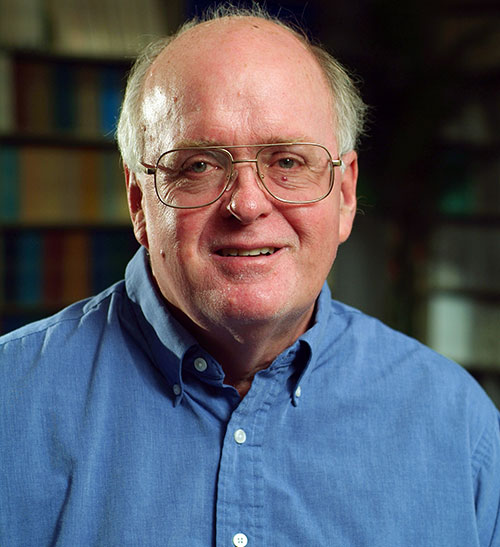
Bruce A. McCarl's Statement on Work Areas
Over the years Bruce McCarl has worked in a number of areas generating contributions. Here statements are made about a number of the broad areas in which he has worked indicating key publications and some of the findings arising from these efforts.
The following clickable table of contents lists these areas
1.1.1 Climate Change Mitigation
2 Methodological Investigations
Dr. McCarl began work on the agricultural and forestry effects of climate change in 1985 and in 1989 on climate change mitigation through greenhouse gas emission control.
McCarl's work on agricultural and forestry effects of climate change was initially done with Richard Adams then later with a variety of others including Chi Chung Chen.
· The work has examined benefits and costs of climate change largely on agriculture and forestry. Initial work appeared in a chapter of the 1989 EPA report to Congress
Adams, R.M., J.D. Glyer, and B.A. McCarl, "The Economic Effects of Climate Change on US Agriculture: A Preliminary Assessment," in Potential Effects of Global Climate Change on the United States, EPA Report to Congress, 1989.
and was also reported in the paper
Adams, R.M., C. Rosenzweig, R.M. Peart, J.T. Richie, B.A.
McCarl, J.D. Glyer, R.B. Curry, J.W.
Jones, K.J. Boote and L.H. Allen. "Global Climate Change and
· Subsequently he has been engaged in reevaluations to include adaptation, pesticides, extreme effects, livestock, and irrigation water supply. The most recent was the US Global Climate Change Research Program National Assessment leading to
Reilly J, Tubiello F, McCarl B, Abler D, Darwin R, Fuglie K, Hollinger S, Izaurralde C, Jagtap S, Jones J, Mearns L, Ojima D, Paul E, Paustian K, Riha S, Rosenberg N, Rosenzweig C. "US Agriculture And Climate Change: New Results." Climatic Change 57 (1-2): 43-69 Mar 2003 (21 SSCI cites)
· US wide Forestry economic implications were addressed for the first time as in
Irland, L.C., D.M. Adams, R.J. Alig, C.J. Betz, C.C. Chen, M. Hutchins, B.A. McCarl, K. Skog, and B.L. Sohngen, "Assessing Socioeconomic Impacts of Climate Change on US Forests, Wood-Product Markets and Forest Recreation," Bioscience, 51(9), 753-764, 2001. (9 SSCI cites)
· This body of work was influential in introducing concepts and expanding consideration indicating that climate change
· Will not be a disaster for food or timber supply
· Can be beneficial,
· Have economic benefits and costs that are quite sensitive to CO2 effects, adaptation, pest effects, enhanced extreme event effects, and northward shifts in cropping patterns among other items.
· These and subsequent effects appraisals have become prominent in the international climate change debate and the UN IPCC process.
· A number of related papers are on http://agecon2.tamu.edu/people/faculty/mccarl-bruce/climchg.html
1.1.1 Climate Change Mitigation
In the late 1980's McCarl's climate change work began to examine the role agriculture and forestry could play in mitigating climate change through sequestration, GHG emission offsets or emission reduction. The work was done with Richard Adams, Darius Adams, Ralph Alig, Ching-Cheng Chang, and Mac Callaway then later with Brian Murray, Uwe Schneider and Heng-Chi Lee among others. McCarl served as lead sectoral analyst throughout and led economic analysis activity on the later efforts.
· Initial work examined the role agriculture and forestry could play in offsetting greenhouse gas emissions looking at livestock, trees and rice. Work in this regard appeared in the report
· This was followed by development of the forest and agricultural sector model (FASOM) that was used to address forestry issues as reported in
· McCarl then turned his attention with students Uwe Schneider and Heng-Chi Lee to a portfolio agricultural then later forestry response as reported in
McCarl B.A. and U.A.
Schneider, "The Cost of Greenhouse Gas Mitigation in
Lee, H-C., B.A.
McCarl, and D. Gillig, "The
Dynamic Competitiveness of US Agricultural and
then later with EPA policy groups in
Murray, B.C., A.J. Sommer, B. Depro, B.L. Sohngen, B.A. McCarl, D. Gillig, B. de Angelo, and K. Andrasko, Greenhouse Gas Mitigation Potential in US Forestry and Agriculture, EPA Report 430-R-05-006, November, 2005.
· Subsequent attention was paid to fungibility and dynamic issues
Across this body of work fundamental insights were generated on the
· Scope of agricultural possibilities,
· Possible market obstacles,
· Agricultural strategies as a bridge to the future,
· Sizes of sequestration, biofuel, afforestation non co2 and other possibilities.
McCarl has presented this work all over the world and is a lead author on the UN Intergovernmental Panel on Climate Change Mitigation report.
A number of related papers are on http://agecon2.tamu.edu/people/faculty/mccarl-bruce/papers.htm
In 1992 McCarl began work with Rich Adams and Rodney Weiher at NOAA on the agricultural economic value of forecasts and adaptive information regarding the El Nino, Southern Oscillation phenomenon. This was done in a value of information framework where agricultural crop mixes were allowed to be adjusted with and without ENSO information. McCarl was again the lead sectoral analyst and led the empirical analysis.
· Initial efforts were done on the South Eastern US in
Adams, R.M., K.J. Bryant, B.A. McCarl, D.M. Legler, J.J. O'Brien, A. Solow, and R. Weiher. “Value of Improved Long-Range Weather Information." Contemporary Economic Policy. 13(1995):10-19. (49 SSCI cites)
· This was followed with a national study
Solow, A.R., R.M. Adams, K.J. Bryant, D.M. Legler, J.J. O'Brien, B.A. McCarl, W.I. Nayda and R. Weiher, "The Value of Improved ENSO Prediction to U.S. Agriculture", Climatic Change, 39, 47-60, 1998. (31 SSCI cites)
· Subsequently McCarl with Chi-Chung Chen and others turned attention to a number of extensions addressing
·
Effects in
Chen, C.C., D. Gillig, B.A. McCarl, and R.L. Williams, "ENSO Impacts on Regional Water Management: A Case Study of the Edwards Aquifer Region," Climate Research, 28 (2), 175-182, 2005.
· Interrelationships with climate change
Chen, C.C., B.A. McCarl, and R.M. Adams, "Economic Implications of Potential Climate Change Induced ENSO Frequency and Strength Shifts," Climatic Change, 49, 147-159, 2001. (9 SSCI cites)
·
Effects of the
Kim, M-K., and B.A. McCarl,
"An Investigation of the Yield and Production Effects of the
· Influence of considering event strength
Chen, C.C., and B.A. McCarl, "The Value of ENSO Information to Agriculture: Consideration of Event Strength and Trade," Journal of Agricultural and Resource Economics, Volume 25, Number 2 (December), 368-385, 2000.
· Effects of improved event characterizations
· Cost of the large 1998 El Nino
This work provided the first sector wide appraisal of this phenomena showing substantial value regionally and nationally to ENSO information and was used in supporting NOAA budget requests to Congress and a report to NASULGC.
This work and follow ups are on http://agecon2.tamu.edu/people/faculty/mccarl-bruce/elnino.html
McCarl began to address agriculture and bioenergy in the late 1970's in conjunction with Wally Tyner and Otto Doering. His program has revisited this topic regularly over the years since then particularly since 1995 in association with work on climate change mitigation particularly with Uwe Schneider and Dhazn Gillig. Examples of this work are
· Developed the first sector wide economic appraisal of bioenergy prospects from agriculture and later the linked agriculture and forestry sectors. Served as lead sectoral analyst on a late 1970's OTA project reported below that considered corn and cellulosic ethanol well in advance of today's activity. Showed biofuel production to be non economic at the time. Reported to policy circles in
Tyner, W., B.A. McCarl, M. Abdallah, C. Bottum, O.C. Doering III, W.L. Miller, B. Liljedahl, R.M. Peart, C. Richey, S. Barber, and V. Lechtenberg, The Potential of Producing Energy From Agriculture, Final Report to Office of Technology Assessment, US Congress, Purdue School of Agriculture, 1979.
· Turned attention in mid 1990s to biofuels as a way to mitigate climate change related greenhouse gas emissions focusing on electricity and liquid fuels subsequently preceding and fostering development of a lot of interest in EPA, USDA and lately globally. Work on this appeared in
McCarl, B.A., D.M. Adams, R.J. Alig, and J.T. Chmelik, "Analysis of Biomass Fueled Electrical Power Plants: Implications in the Agricultural and Forestry Sectors," Annals of Operations Research, 94, 37-55, 2000. (6 SSCI Cites)
McCarl B.A. and U.A.
Schneider, "The Cost of Greenhouse Gas Mitigation in
McCarl, B.A. and U.A. Schneider, "U. S. Agriculture's Role in a Greenhouse Gas Emission Mitigation World: An Economic Perspective", Review of Agricultural Economics, 22(1), 134-159, 2000.23 SSCI cites.
Schneider, U.A., and B.A. McCarl, "Implications of a Carbon Based Energy Tax for US Agriculture," Agricultural and Resource Economics Review, volume 34(2). October, 265-279, 2005.
·
Recently McCarl has highlighted greenhouse gas
implications of biofuels across possibilities for producing biodiesel, ethanol,
cellulosic ethanol and biofeedstock fueled electric power. This resulted in a paper being used in an
emerging report led by former Senators Dole and Daschle. It has also supported presentations in the last
year at 2 professional meetings, USDA and EPA meetings, Outreach meetings at
This and other McCarl biofuel related work is on his web page at http://agecon2.tamu.edu/people/faculty/mccarl-bruce/biomass.html .
McCarl has worked on a number of other issues like water and air quality which are overviewed below along with other work on soil conservation, and fisheries.
Beginning at Purdue McCarl examined issues involving water
in largely an intersectoral trading context and in alliance with environmental
quality issues particularly in the context of
This work has led to papers like
Keplinger, K.O., B.A.
McCarl, B.A., K.O. Keplinger, C.R. Dillon, and R.L. Williams, "Limiting Pumping from the Edwards Aquifer: An Economic Investigation of Proposals, Water Markets and Springflow Guarantees," Water Resources Research, 35(4), 1257-1268, 1999. (9 SSCI cites)
Contributions include analysis of a number of issues in
setting up ground water markets in
Substantial work has also been done on including irrigation concerns in agricultural sector and climate change analyses that have been followed by others as discussed in the sector modeling section below. Sample work appears on http://agecon2.tamu.edu/people/faculty/mccarl-bruce/water.html
McCarl and Richard Adams did a number of studies in the early 1980s on ozone and acid rain among other air quality issues. The ozone work ended up in a major EPA report and was used in justifying provisions of the Clean Air act. Contributions include
Adams, R.M., S.A. Hamilton, and B.A. McCarl. "The Benefits of Pollution
Control: The Case of Ozone and
McCarl's first professional work area centered on farm management and farm level modeling due to faculty turnover shortly after he joined the Department of Agricultural Economics at Purdue. This is not an area of McCarl program focus today although occasional efforts are done. However that work is the foundation for the bottom up sector modeling that is used through McCarl's program.
McCarl's main contributions in Farm Management are
·
Development of an operational approach to using
linear programming in an outreach program with farmers. This extended work of Candler and Doster at
Purdue and provided the foundation for the Purdue Model B outreach program that
continues in an evolved form today. It
also provided the foundation for the International Harvester ProAg program, a
program in
McCarl, B.A., W.V. Candler, D.H. Doster, and P.R. Robbins. "Experiences with Farmer Oriented Linear Programming for Crop Planning." Canadian Journal of Agricultural Economics. 25(1977):17‑30. (17 SSCI cites)
· Developed an operational approach to machinery selection under risk using mixed integer programming and stochastic dominance approach
Danok, A.B., B.A. McCarl, and T.K. White. "Machinery Selection Modeling: Incorporation of Weather Variability." American Journal of Agricultural Economics. 62(1980):700‑708. (23 SSCI cites)
· Developed approaches to handling farm level risk expanding on the work of Hazell and others in the paper more on this is in Risk section
Brink, L.G. and B.A. McCarl. "The Tradeoff Between Expected Return and Risk Among Cornbelt Farmers." American Journal of Agricultural Economics. 60(1978):259‑263. 42 SSCI cites
· Did early work on multiple objectives beyond income and risk particularly in developing countries
Barnett, D. B. Blake, and B.A. McCarl. "Goal Programming via Multidimensional Scaling Applied to Senegalese Subsistence Farms." American Journal of Agricultural Economics, 64(1982):720‑727. 18 SSCI cites
· Other efforts deal with handling risk in farm irrigation investment.
This work has influenced a number of subsequent farm studies and the types of risk modeling, integer investment modeling and multiple objectives affecting the way the profession approached these problems.
McCarl was trained in Operations Research/Management Science/Mathematical Programming before entering Agricultural Economics. During his career he has always worked on the methods of economic analysis. This work concentrates in the areas detailed below.
McCarl has worked on mathematical programming application methods throughout his career with such methods underlying at least 75% of his professional writings. His main contributions involve
· Construction and release of a book with Thomas Spreen that appears on the internet and is used in at least 12 Universities plus by numerous researchers throughout the world (see McCarl and Spreen at http://agecon2.tamu.edu/people/faculty/mccarl-bruce/books.htm . This has results in a contribution to the training of thousands across many disciplines and has likely improved analysis quality.
· Development of methods and approaches including the concepts released in
· A paper on multi level programming that has stimulated a large body of operations research work
Fortuny‑Amat, J., and B.A. McCarl. "A Representation and Economic Interpretation of a Two‑Level Programming Problem." Journal of the Operational Research Society. 32(1981):783‑792. (77 SSCI cites)
· A paper on price endogenous programming synthesizing the state of the art that has become a fundamental reference in a lot of subsequent work
McCarl, B.A. and T.H. Spreen. "Price Endogenous Mathematical Programming as a Tool for Sector Analysis." American Journal of Agricultural Economics. 62(1980):87‑102. (72 SSCI cites)
· Papers on risk analysis that have stimulated a lot of subsequent work regarding incorporation of risk attitudes
Brink, L.G. and B.A. McCarl. "The Tradeoff Between Expected Return and Risk Among Cornbelt Farmers." American Journal of Agricultural Economics. 60(1978):259‑263. (42 SSCI Cites)
Lambert, D.K. and B.A. McCarl. "Risk Modeling Using Direct Solution of Nonlinear Approximation of the Utility Function." American J. of Ag. Economics. 67(1985):845‑852. (26 SSCI Cites)
· A paper on approaches to model validation
McCarl, B.A. "Model Validation: An Overview With Some Emphasis on Risk Models." Rev. of Mkt. and Ag. Econ. 52(1984):153‑174. (17 cites)
· Development of approaches to use of GAMS and instruction of GAMS plus software releases that have led to GAMS being the most common approach to mathematical programming in the Agricultural Economics Profession with McCarl being a very early user, one of the first teachers and author of the Users Guide (see http://www.gams.com/dd/docs/bigdocs/gams2002/mccarlgamsuserguide.pdf )
McCarl began work on risk in 1973 and conceptualized a new modeling approach to hurricanes and climate change within the last few weeks with continuous effort in between. Notable efforts in this regard are
· Developed approaches to handling farm level risk expanding on the work of Hazell and others in the paper doing a study with farm data identifying relevant range for risk aversion parameters
Brink, L.G. and B.A. McCarl. "The Tradeoff Between Expected Return and Risk Among Cornbelt Farmers. American Journal of Agricultural Economics. 60(1978):259‑263. 42 SSCI cites
· Developed the DEMP method for better depicting expected utility based incorporation of risk attitudes leading to substantial follow on work
Lambert, D.K. and B.A. McCarl. "Risk Modeling Using Direct Solution of Nonlinear Approximation of the Utility Function." American J. of Ag. Economics. 67(1985):845‑852. (26 SSCI Cites)
· Developed an early application of stochastic dominance and the interval approach following up on work by Jock Anderson and Jack Meyer in paper
Danok, A.B., B.A. McCarl, and T.K. White. "Machinery Selection Modeling: Incorporation of Weather Variability." Amer. J. of Ag. Economics. 62(1980):700‑708. (23 SSCI cites)
· Conducted with students many applications and explanations of work by Cocks and Rae leading to popularization of Stochastic Programming with Recourse or Discrete Stochastic Programming. For example
Adams, R.M., K.J. Bryant, B.A. McCarl, D.M. Legler, J.J. O'Brien, A. Solow, and R. Weiher. “Value of Improved Long-Range Weather Information." Contemporary Economic Policy. 13(1995):10-19. (49 SSCI cites)
· Worked with David Bessler to develop a way of linking probabilistic confidence interval statements and risk aversion parameters
McCarl, B.A., and D.A. Bessler, "Estimating an Upper Bound on the Pratt Risk Aversion Coefficient When the Utility Function is Unknown," Australian Journal of Agricultural Economics, 33, 56-63, 1989. (8 SSCI cites)
· Worked with Richard Boisvert to create a commonly cited literature review on stochastic programming that was an extension of coverage in McCarl and Spreen chapter 14.
Boisvert, R.N., and B.A. McCarl, Agricultural Risk Modeling Using Mathematical Programming, Regional Research Bulletin Number 356, Southern Cooperative Series, 1-103, 1990.
· Developed an approach for establishing a balance in homeland security between preparation and response under stochastic food safety or other events
Elbakidze, L., and B.A. McCarl, "Animal Disease Pre Event preparedness vs. Post Event response: When is it Economic to Protect?" Journal of Agricultural and Applied Economics, Volume 38 Number 2, 327-336, 2006.
In 1974 McCarl secured a grant from USDA to develop a quick turn around alternative to Earl Heady's Iowa State Agricultural sector models in conjunction with Harry Baumes and Tom Spreen and later Ching-Cheng Chang. McCarl still maintains and uses this model today. In the intervening years
· Developed a paper on price endogenous programming synthesizing the state of the art that has become a fundamental reference in a lot of subsequent work
McCarl, B.A. and T.H. Spreen. "Price Endogenous Mathematical Programming as a Tool for Sector Analysis" American Journal of Agricultural Economics. 62(1980):87‑102. (72 SSCI cites)
· Did 50 or more sectoral cost benefit analyses mainly on environmental issues (climate change, water, El Nino) as discussed above.
· Provided the fast turn around model to USDA where Bob House modified and expanded it into the USMP model that has been heavily used for policy analysis in USDA and still exists today contributing to a fundamental change in the way USDA analyzed many environmental policies in turn affecting policy.
·
· Developed approaches to aggregation and calibration particularly with Hayri Onal that are used worldwide
·
· Migrated the model into ASM, FASOM, ASMGHG, and today FASOMGHG as described on http://agecon2.tamu.edu/people/faculty/mccarl-bruce/papers.htm
· Developed methods to include market price distortions in sector models through policy
Chang, C.C., B.A. McCarl, J.W. Mjelde and J.W. Richardson. "Sectoral Implications of Farm Program Modifications." American J. of Agricultural Economics. 74(1992):38-49 (33 SSCI cites)
· Developed approaches in conjunction with Darius Adams to incorporate Dynamic forestry concerns in sector models expanding Norm Johnsons models
Adams, D.M., R.J. Alig, B.A. McCarl, J.M. Callaway and S.M.
Winnett, “An Analysis of the Impacts of Public Timber Harvest Policies on
Private Forest Management in the
· Extended sector models to treat adaptive risk
Adams, R.M., K.J. Bryant, B.A. McCarl, D.M. Legler, J.J. O'Brien, A. Solow, and R. Weiher. “Value of Improved Long-Range Weather Information." Contemporary Economic Policy. 13(1995):10-19. (49 SSCI cites)
· Worked in many interdisciplinary teams to appraise polices, programs and environmental changes
Beginning in 1985 McCarl started teaching GAMS classes and incorporating GAMS into his research program. In turn starting in 1989 when TAMU purchased a minicomputer that would run realistic models his program switched over to GAMS use for all mathematical programming applications. Subsequently efforts included
· Developing McCarl and Spreen book to support algebraic modeling that has been used to train many professionals across at least a dozen universities then developed all examples in GAMS and wrote book employing GAMS modeling concepts.
· Developing in 1991 the GAMSCHK analysis software for model debugging that is distributed free with GAMS and is used worldwide
· Developing in 1992 the GAMSBAS advanced basis software that is distributed free with GAMS and was used worldwide until GAMS developers internalized its function.
·
Developing starting in 1995 courses for
continuing education on Basic and Advanced GAMS that have been taught to USDA
twice, EPA, ERPI, Electrabel (
· Developing in 2000 in association with Alex Meeraus at GAMS a Users Guide that explained to ordinary GAMS users many features not included, or poorly covered in the GAMS documentation existing at that time. Continue to maintain that Guide (see http://www.gams.com/dd/docs/bigdocs/gams2002/mccarlgamsuserguide.pdf )
· Developing in 2000 the McCarl GAMS newsletter of which there has collectively 21 released to a list of about 1000. See http://www.gams.com/maillist/newsletter.htm
· Teaching around 300 people in GAMS classes off campus and 200 on campus.
· Jointly with Uwe Schneider a GAMS interfaced GNUPLTXY graphing software expanding on work by Tom Rutherford. Uwe continues to maintain this software.
Through these efforts McCarl has contributed to expanded GAMS use in many professions and improved ability of many to better use the software.
With the exception
of my
·
Applied Economic Analysis using Mathematical Programming
at
· Introduction to Matrix Algebra at Purdue from 1973-1977
· Applied Risk Analysis at Purdue and Texas A&M from 1975-1995 intermittently as accessible here.
·
Dynamic Economic Analysis at
· Advanced Production Economics/GAMS Sector Modeling at Texas A&M intermittently in the 1990s.
· Frontiers of Resource Economics – Climate Change segment at Texas A&M since 2000 as accessible here.
· GAMS based Computable General Equilibrium modeling in 2003 as accessible here.
· Mathematical Programming Analysis as part of a Master quantitative methods course at Texas A&M since 2001 as accessible here.
· Economics of Homeland Security at Texas A&M since 2007 as accessible here.
I have also had a Texas A&M/continuing education program that has been taught in College Station, internationally at several universities in Europe, at a number of government agencies work, a firm and an industry association instructing Texas A&M graduate students, economists, chemical engineers and energy analysts in
· Basic GAMS
· GAMS for Agricultural Analysis
· Advanced GAMS
with supporting materials here. In the process of this program I have developed an Expanded GAMS User Manual and a GAMS Newsletter to keep people up to date.
My class materials have been widely used in courses around the world and by researchers as evidenced by the number of comments and questions I get from students, and researchers plus requests for permission to use my materials.
I have graduated 37 PhD and 12 MS many of which have gone on to highly influential careers as listed here.
McCarl's program has traditionally involved substantial efforts on outreach. Some notable efforts
·